Annual running costs, preventive maintenance and professional management for international owners
How much does it cost to maintain a luxury villa in Ibiza? For an international buyer, this question is as important as the purchase price. Once the keys have been handed over, ownership creates a series of recurring commitments: municipal taxes, insurance, electricity, water, pool care, gardening, cleaning, security, technical inspections and, when the owner lives elsewhere, a reliable person who can inspect the property and coordinate suppliers.
There is no universal figure. A modern villa used for a few months each year, with Mediterranean planting and efficient systems, requires a different budget from an older finca, a seafront house or a large estate with staff, guest accommodation and complex landscaping. Location, size, age, technical complexity and the expected service level usually influence annual expenditure more than market value alone.
As a practical planning range, a medium-sized modern villa may require approximately EUR 18,000 to EUR 45,000 a year in normal running and maintenance costs. A large villa or finca with comprehensive management, complex systems and frequent service may require EUR 50,000 to EUR 120,000 a year or more. These ranges are indicative. They do not include mortgage costs, major renovations, tourist-rental operations, permanent household staff or the owner’s personal tax position.
This guide is not a substitute for property-specific quotations. Its purpose is to explain how a realistic annual budget is built, which records should be requested before purchase and how planned maintenance can prevent an exceptional property from losing value through neglect. For a second home, the most expensive item is not always an invoice. It is often the failure to notice a small problem before it becomes a major repair.
The true cost of a villa is revealed not only at purchase, but in the standard to which it is maintained every year.
What belongs in the annual maintenance budget
A useful budget separates predictable running costs from exceptional repairs. Predictable expenditure can be organised through contracts, scheduled visits and automatic payments. Extraordinary repairs and replacement cycles need a separate reserve. Combining both categories creates a misleading picture: paying a gardener every month does not mean funds are available for a new heat pump, roof waterproofing or a failed pool filtration system.
It is also important to distinguish the cost of the building from the cost of using it. A villa that remains closed for ten months still needs supervision, ventilation, humidity control, security and preparation before every arrival. A permanently occupied home consumes more energy and water, but problems are usually identified sooner. A property that is legally rented requires turnover cleaning, guest support, increased wear and a different management structure.
| Cost category | What it normally includes | How to control it |
| Obligations | IBI local charges insurance community fees and tax duties | Annual calendar and tax review |
| Operations | Electricity water internet climate control pool and garden | Contracts meter readings and monthly comparison |
| Conservation | Inspections repairs painting waterproofing and equipment | Preventive plan and annual reserve |
| Security | Alarm cameras access key management and response | Protocols tests and named contacts |
| Management | Visits reports suppliers invoices and incidents | Clear scope and spending limits |
| Use | Cleaning linen preparation supplies and personal service | Budget per stay or season |
How much does it cost to maintain a luxury villa in Ibiza by property type
The following figures are starting points for planning and supplier discussions. They cover normal operation, insurance, basic consumption, routine maintenance and a prudent technical reserve. Every figure must be adjusted to the actual property. IBI, municipal charges and personal taxes should be assessed separately because they depend on the municipality, cadastral value, ownership structure and tax residence.
| Property profile | Indicative annual budget | Planning assumption |
| Premium apartment | EUR 5,000 to 15,000 | Managed community without a private pool or garden and limited use |
| Medium modern villa | EUR 18,000 to 45,000 | 250 to 400 sqm with pool garden and periodic management |
| Large villa or finca | EUR 50,000 to 120,000 or more | Over 500 sqm extensive grounds complex systems and full management |
A low figure is realistic only when the property is efficient, use is limited and every service has a precise scope. A high figure does not automatically indicate poor management. It may reflect permanent staff, wellness facilities, lifts, several pools, extensive gardens, guest houses or a level of service similar to a small private hotel. The budget has to match the standard the owner expects on arrival.
Prepare two scenarios whenever possible. The first should describe a normal year. The second should add one significant repair or partial replacement of an installation. If the second scenario creates financial discomfort, the property may be structurally too demanding even when the purchase price falls within the available capital.
Municipal taxes and fiscal obligations
Spain’s local property tax, Impuesto sobre Bienes Inmuebles or IBI, is calculated by applying the municipal rate to the taxable cadastral value rather than directly to the purchase price. Two villas with similar market values may therefore receive different bills. Current published figures also vary by municipality: the Eivissa tax ordinance states a 0.82 per cent rate for urban property, while Santa Eularia reported an urban rate of 0.40 for 2026. The current bill and municipal ordinance should always be checked for the specific property.
Other local charges may apply to waste collection, drainage, vehicle access or municipal services. A proper review goes beyond asking what the previous owner paid. It should establish which bills relate to the plot, whether they have been paid, how they are collected and whether the recorded property characteristics correspond to the home as it is actually used.
Non-resident owners may have obligations under Spanish Non-Resident Income Tax (IRNR), including when the property is used only privately or remains empty. The treatment changes if the home is rented. Other liabilities may also arise depending on tax residence, ownership structure and wealth. A qualified Spanish tax adviser should assess the individual position and coordinate it with the owner’s country of residence.
The Spanish Tax Agency publishes filing periods and Model 210 requirements for non-resident income. These deadlines should be reviewed every year rather than copied from an earlier calendar. A local manager can organise records and reminders, but the return remains the responsibility of the owner and the appointed tax adviser.
Building contents and liability insurance
Insurance for a luxury villa should not be selected by premium alone. The insured amount needs to reflect rebuilding cost and the real value of contents, not the market value of the land. Art, designer furniture, specialist equipment, solar installations, wellness facilities, walls, landscaping and outbuildings may need separate declarations or additional cover.
The risk profile changes with location and use. A home close to the sea is more exposed to salt and wind. A finca among pine trees or scrubland needs careful fire prevention and land management. A property left empty for long periods requires a policy that accepts its actual use and security arrangements. If the villa is rented, standard household cover may be insufficient.
Before accepting a policy, compare the excess, exclusions, water damage, electrical damage, liability, emergency assistance and conditions during building work or absence. The quality of cover is best judged by how it would respond to the incidents most likely to affect that particular property.
Electricity climate control water and connectivity
Consumption depends on how the property is used as well as its size. An empty villa continues to use energy when alarms, servers, cameras, pool filtration, irrigation, pumps, dehumidification, wine storage or minimum climate settings remain active. Switching everything off may appear economical, but it increases the risk of humidity, odours, flat batteries and damage to sensitive systems.
Contracted power, tariff structure, operating hours and equipment efficiency all matter. Aerothermal systems, insulation, shading, solar panels and intelligent controls can reduce consumption, but they also need correct settings and maintenance. Home automation does not save money by itself. It creates value when thresholds are sensible, warnings are monitored and someone can act if the connection or system fails.
Water deserves separate monitoring. A pool, irrigation system or small concealed leak can turn a normal bill into a serious expense. Remote readings, comparisons with the same month in the previous year and consumption alerts make anomalies easier to identify. Where a property uses a well, tanks, softening or treatment equipment, the budget should include analysis, filters, pumps, servicing and any applicable permissions.
- Record electricity and water consumption every month, including periods when the villa is empty.
- Separate background consumption from use during owner stays, guests or events.
- Review contracted capacity and the operating schedule for filtration and climate control.
- Set alerts for leaks, power failure, temperature and humidity.
- Test backup batteries, internet connections and wireless coverage.
- Define who receives each alert and the response time expected.
Swimming pools and water features
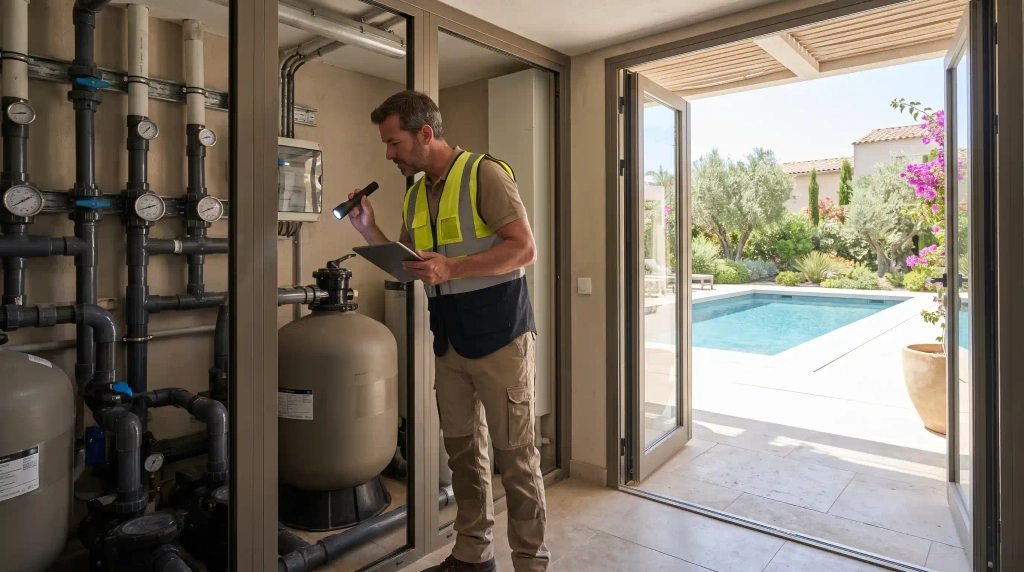
A swimming pool requires continuity. Water can look clear while chemistry or filtration is already outside the correct range. A professional service normally includes cleaning, testing, chemical treatment, water-level control and a basic equipment inspection. Repairs to pumps, filters, heating, lighting, covers, grouting or lining are usually charged separately.
One local provider currently publishes a starting price of EUR 199 per month for weekly service including chemicals and photo reports. The final cost depends on dimensions, equipment, visit frequency, access, surrounding vegetation and the presence of heating, a jacuzzi or an infinity overflow. A technically complex pool may consume more electricity and water than a standard installation and require additional visits.
The contract should state which products are included, how readings are reported, who may authorise repairs and what response is available during the peak season. For an absent owner, photographs after every visit provide useful control. An annual allowance for equipment and waterproofing is also needed because routine cleaning does not cover their replacement.
Garden landscaping and responsible water use
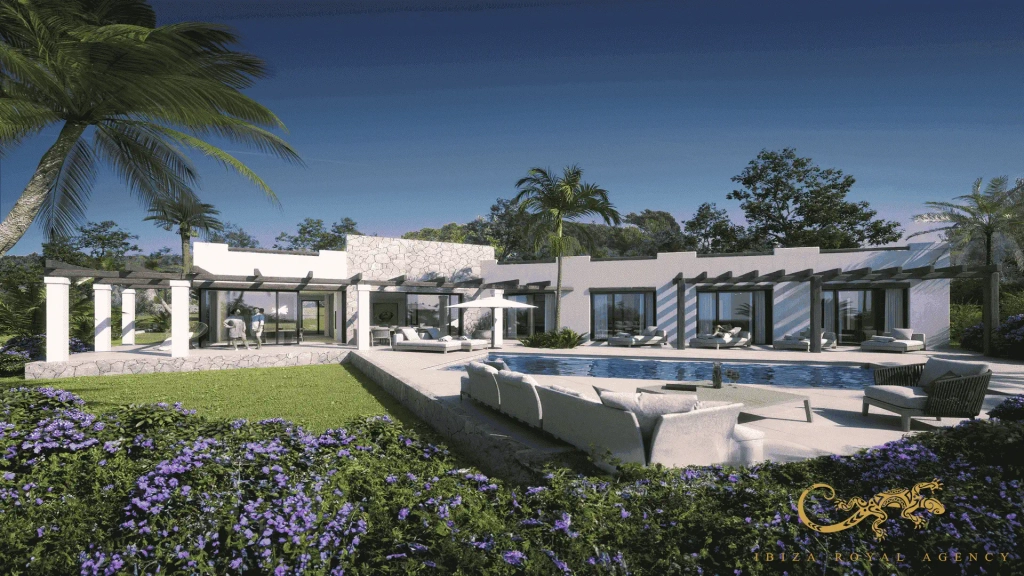
A Mediterranean garden can be efficient, but it is never entirely maintenance free. Irrigation, pruning, feeding, pest control, waste removal and tree inspection need a seasonal plan. Lawns, palms, fruit trees, large hedges and delicate species demand more water and labour than native planting combined with permeable mineral surfaces.
An Ibiza gardening company publishes indicative prices from approximately EUR 150 per month for a small villa garden. Larger gardens with palms, lawn and automatic irrigation commonly fall between EUR 300 and EUR 800 per month. A site visit is still essential because access, slope, frequency and green-waste removal can change the quotation materially.
The plan should include work outside the monthly fee: high-level pruning, palm treatment, land clearance, irrigation repair, replacement planting and preparation for heat or strong wind. On a finca, vegetation management and fire prevention are practical responsibilities connected to safety, insurability and the long-term condition of the landscape.
The most valuable garden is not the one that consumes the most resources, but the one designed to remain healthy and attractive in the local climate.
Cleaning linen and preparing the property
Cleaning a closed villa does not begin on the day before arrival. Dust, humidity, terraces, glazing, textiles, outdoor kitchens and furniture require attention even without occupants. Frequency depends on exposure, size, materials and the presentation standard expected. A home near the sea or among pine trees often needs more exterior care than a sheltered property in an urban community.
Separate routine cleaning, deep cleaning and arrival preparation. Routine work protects the home. Deep cleaning may include glazing, upholstery, rugs, technical rooms and outside areas. Arrival preparation can add linen, climate settings, provisions, flowers, equipment testing and coordination with drivers or guests. One total price without a defined scope makes quotations difficult to compare.
An inventory and key protocol are essential when several people have access. Every entry should be authorised, and damage or missing objects recorded. Staff responsible for art, stone, specialist fabrics or designer objects need instructions on suitable products and methods. Incorrect cleaning can cause more damage than a short delay.
Security supervision and access control
A monitored alarm is only one part of security. Perimeter condition, lighting, correctly positioned cameras, gate maintenance, key control, network privacy and a response protocol matter equally. The owner should know who receives an alert, who may enter, how an incident is verified and what happens if electricity or internet fails.
Cameras and access systems must respect privacy rules affecting staff, guests and neighbours. Passwords should not circulate informally, and former supplier accounts should be removed. Home automation, video entry and smart locks make remote ownership easier, but they also create cybersecurity responsibilities and need secure administration.
A gated community may provide common security and controlled access, but it does not automatically protect the private home. Before purchase, check the rules, fees, staffing and actual coverage. A detached villa needs reliable local response in its budget; a notification on the owner’s phone is not a complete incident plan.
Professional management for owners who live abroad
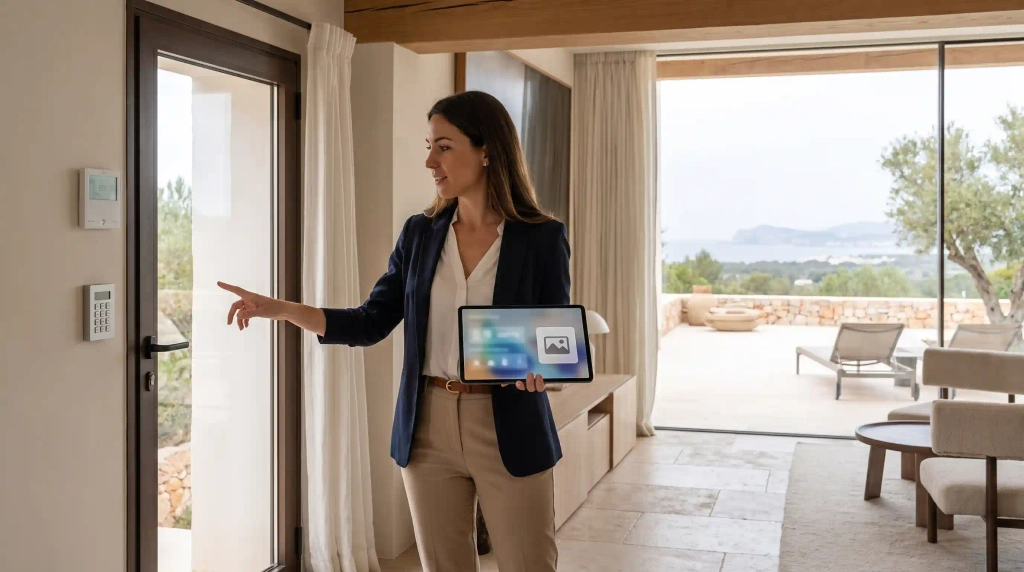
Property management is different from gardening or cleaning. The manager represents the owner operationally: holding keys, inspecting the home, recording meters, coordinating suppliers, documenting incidents, receiving deliveries, approving work within agreed limits and preparing the villa for use. The value lies in continuity and accountability, not in creating unnecessary services.
Published Ibiza pricing varies considerably. Basic caretaker or keyholding services can start at about EUR 450 to EUR 680 per month. Standard villa management is published from around EUR 1,000 per month and may reach EUR 1,500 to EUR 2,200 for larger properties. Comprehensive management with seasonal audits, continuous coordination and a dedicated manager is published from approximately EUR 2,400 to more than EUR 5,000 per month, before VAT and supplier invoices.
These figures can be compared only after reading the scope. Some retainers include weekly inspections and reports. Others coordinate pool and garden teams but charge separately for project time. Ask about visit frequency, emergency availability, named personnel, insurance, confidentiality, supplier mark-ups and spending authority.
| Service level | Typical scope | Suitable profile |
| Basic oversight | Keyholding periodic inspection report and incident notice | Apartment or simple villa with stable suppliers |
| Standard management | Oversight suppliers minor repairs bills and arrival preparation | Second home with pool garden and long absences |
| Full management | Audits planning ongoing supervision projects and concierge | Large villa finca or owner delegating operations |
Preventive technical maintenance
Preventive maintenance protects comfort and reduces the risk of emergency repairs. Air conditioning, aerothermal systems, underfloor heating, solar panels, water softeners, pumps, lifts, generators, irrigation, automatic gates and pool equipment each have a servicing cycle. A digital property file containing manuals, invoices, installers and warranties makes past work and replacement parts traceable.
An annual inspection of the building envelope is particularly useful in Ibiza. Roofs, joints, waterproofing, drainage, windows, walls and terraces face intense sun, short heavy rainfall, wind and salt. Repairing a worn joint early costs far less than treating a leak and damaged interior finishes after a storm.
The property also has longer replacement cycles. Exterior paint, varnish, batteries, pumps, appliances, outdoor fabrics, lighting, networks and climate equipment do not last indefinitely. Allocate money to future replacement each year even when it is not spent. Otherwise every renewal appears unexpected although it was technically foreseeable.
New build renovated villa or older property
A new villa normally offers stronger energy performance, recent equipment and warranties. This reduces certain repairs in the early years, but it does not remove maintenance. Aerothermal systems, automation, ventilation, solar panels and advanced equipment require qualified technicians. The first months may also reveal defects that need to be documented within the relevant warranty periods.
A renovated villa can combine character with modern engineering, but the buyer needs to know exactly what was renewed. A new kitchen says nothing about roof waterproofing, the electrical supply or drainage. Invoices, permissions, warranties and drawings are needed to create a realistic maintenance plan.
For an older home without a recent comprehensive renovation, the reserve should be larger and a technical inspection before purchase becomes more important. Not every defect requires immediate work, but every defect needs a priority. Sustainable ownership depends on planning repairs before they become emergencies.
How location changes maintenance costs
The setting affects costs directly. Immediate proximity to the sea accelerates corrosion of metalwork, windows and outside equipment. Elevated homes receive more wind and may need closer attention to shutters, roofs and planting. Wooded plots require fire prevention and land clearance. Narrow or steep access can make cranes, deliveries and building work more expensive.
Distance from suppliers also matters. An emergency repair in a remote area may involve more travel time, while skilled labour becomes harder to secure during high season. A prudent owner selects suppliers before they are needed, agrees priorities and keeps references for components that cannot be obtained quickly.
When comparing locations, ask one practical question: how will this home operate in February, in August and during a three-month absence? An exceptional location may still be the right choice, but its logistics belong in the decision and budget from the start.
Detached villa compared with a premium residential community
In a residential community, some costs are shared through service charges: access, lifts, gardens, pools, security, administration and common insurance. This can improve predictability, but it does not guarantee low expenditure. Premium communities may have high regular fees and special assessments for major works. Review budgets, accounts, meeting minutes and planned projects before buying.
A detached villa gives the owner full autonomy, but every service remains the owner’s responsibility. Suppliers and frequencies can be chosen freely, while all local coordination must also be organised. For an international owner, that freedom needs a professional structure. The true cost includes time, oversight and responsibility as well as invoices.
| Issue | Detached villa | Premium community |
| Control | Owner selects suppliers and priorities | Shared decisions and community rules |
| Predictability | More individual contracts and variable costs | Regular fee with possible special assessments |
| Security | Private system and response partner | Common access plus private security requirements |
| Outdoor areas | Pool garden and access funded by owner | Part of the service may be shared |
| Absence | Local manager or caretaker usually needed | Community manages shared areas not the interior |
Illustrative budgets for three property profiles
These examples show how to structure the calculation, not what a particular home will cost. The ranges are not quotations and should be replaced with bills and local proposals before purchase. Mortgage payments, structural renovation, permanent staff, tourist-rental operations and personal taxes such as IRNR or wealth-related liabilities are not included.
| Budget item | Premium apartment | Medium modern villa | Large villa or finca |
| Community or oversight | EUR 2,400 to 7,200 | EUR 5,400 to 16,000 | EUR 18,000 to 60,000 |
| Private pool and garden | Usually not applicable | EUR 4,000 to 12,000 | EUR 10,000 to 30,000 |
| Utilities and internet | EUR 1,200 to 3,500 | EUR 4,000 to 12,000 | EUR 10,000 to 30,000 |
| Insurance | EUR 400 to 1,200 | EUR 1,000 to 4,000 | EUR 3,000 to 12,000 or more |
| Cleaning and preparation | EUR 600 to 2,500 | EUR 2,000 to 8,000 | EUR 6,000 to 25,000 |
| Technical reserve | EUR 1,000 to 3,000 | EUR 5,000 to 15,000 | EUR 15,000 to 50,000 or more |
Do not add every line automatically because contracts may overlap. Full management may coordinate pool and garden teams without including their supplier invoices. A community policy may cover the building but not private contents. Cleaning may be included in concierge support or bought separately. The final budget should remove double counting and confirm whether quoted prices include VAT.
The table also shows why percentages of purchase price can be misleading. A compact high-value villa with simple native landscaping may cost less to operate than a lower-priced finca with extensive land, several buildings and old infrastructure. The budget should be based on physical systems and service requirements, not prestige or asking price.
Turning invoices into a reliable annual budget
A folder of invoices is not yet a maintenance budget. Every cost needs a consistent basis: amount including or excluding VAT, service period, frequency, included materials and any time charged for coordination or emergencies. A monthly fee may look attractive while chemicals, waste removal, travel or repairs are billed separately. A higher fixed fee may provide better predictability when inspections, reporting and minor interventions are included.
Do not compare calendar years without considering occupancy. A villa used for six months in one year and six weeks in the next will have different consumption patterns. Record occupancy days, guests, periods of intensive climate control, special events and months when the property was closed. This reveals which costs are fixed and which arise from use.
A useful annual report records the budget, actual cost, variance, reason and decision for the following year by category. A higher water bill may reflect more occupancy, a leak or a change in irrigation. Lower technical expenditure may show efficiency or deferred work. The explanation matters more than the colour of a spreadsheet cell. For an owner abroad, figures should link to invoices, photographs and approvals so every item remains traceable.
Annual conservation calendar
| Period | Main tasks |
| January to March | Review humidity roofs climate equipment insurance contracts and annual budget |
| April and May | Prepare pool garden cooling outdoor furniture and security for the season |
| June to September | Monitor consumption irrigation pool cleaning access and response closely |
| October and November | Post-season inspection pruning drainage waterproofing inventory and repairs |
| December | Close the year update replacement plan keys accounts and protocols |
Adapt the calendar to actual use. A property occupied at Christmas needs preparation in December. A villa closed all winter requires ventilation and inspection after storms. The most effective schedule connects climate, occupancy and the service cycle of every installation.
Controlling costs without lowering the standard of the villa
Cost control does not mean delaying inspections until a fault becomes visible. The strongest savings come from removing duplication, measuring consumption, negotiating clear scopes and replacing emergency work with planned maintenance. One accountable coordinator can be more efficient than several suppliers who do not communicate, provided fees and authority are transparent.
- Request comparable quotations showing frequency materials taxes and exclusions separately.
- Review energy insurance alarm internet pool garden and management contracts annually.
- Use meters and alerts for water electricity temperature and humidity.
- Combine seasonal works and book them before the busiest months.
- Maintain an approved supplier list with agreed emergency rates.
- Request photographs before and after work completed during an absence.
- Separate essential repair from aesthetic improvement and value-enhancing projects.
- Keep the replacement reserve separate from the normal operating budget.
A concise monthly report can cover condition, incidents, completed work, photographs, consumption, outstanding invoices and decisions required. The owner does not need a stream of unstructured messages, but organised information that supports timely action.
Permanent staff compared with on demand services
Larger homes raise a decision that can transform the budget: employ permanent staff or contract external services. A villa used only at certain times may operate well with scheduled cleaning, garden, pool and technical services under one coordinator. A frequently used finca with several buildings, regular guests or a very high service standard may justify permanent staff.
An employee costs more than net salary. The calculation includes contract, social charges, holiday, replacement cover, health and safety, working hours, possible accommodation and employment-law advice. Duties must also be defined. A house manager does not automatically replace a pool technician, electrician, specialist gardener or climate engineer. Unclear roles lead to missed tasks and uncertain liability.
| Operating model | When it may fit | Main control point |
| External suppliers | Periodic use and predictable services | Coordination access reporting and emergency response |
| Local property manager | Absent owner needing continuous supervision | Scope independence and spending authority |
| Permanent staff | Intensive use complex estate guests and daily service | Total labour cost duties rest and replacement |
| Hybrid model | Permanent presence plus specialist contractors | No duplication and one operating protocol |
Compare the complete annual cost of each model rather than the monthly figure alone. Then account for the less visible tasks: who opens the property before arrival, checks an alarm at night, supervises a technician and documents the repair? Availability and trust have economic value for an international owner, but they should be supported by contracts, controls and a clear separation between recommending, approving, carrying out and paying for work.
The renewal reserve for costs that do not appear every month
The operating budget keeps the villa working day to day. The renewal reserve protects its quality over the medium term. Even in a year without repainting, pump replacement or new outdoor fabrics, technical life cycles continue. A separate provision reduces the risk that several replacements fall in the same season or have to be funded under pressure.
Build the reserve from a technical inventory, the age of installations and a five-year plan rather than an arbitrary percentage of the purchase price. The plan can include roof waterproofing, exterior painting, climate systems, pool equipment, irrigation, batteries, appliances, furniture and digital infrastructure. Give each item an expected date, priority and budget range, then review the plan annually.
Documents to request before purchasing
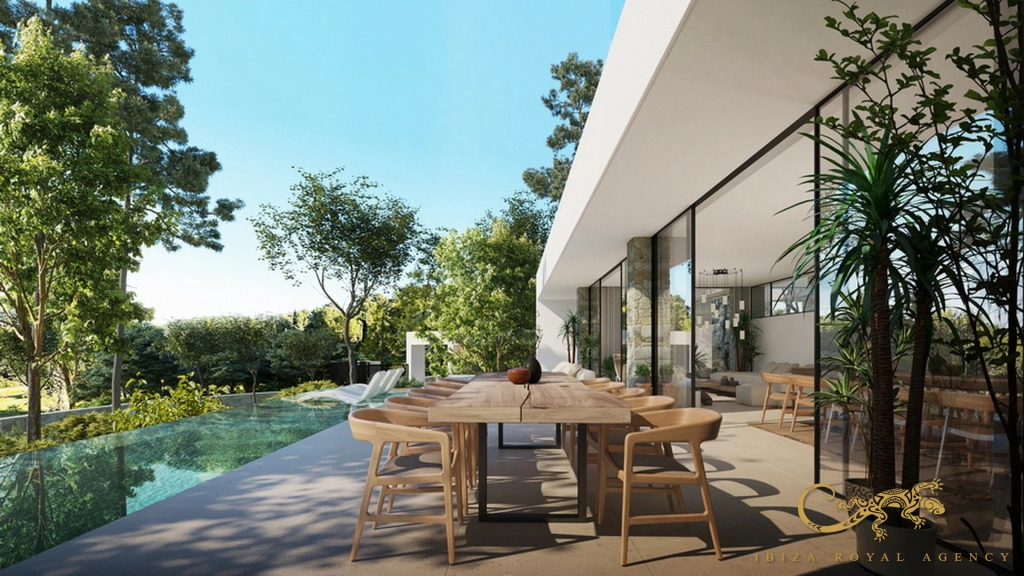
Future maintenance costs should be investigated during the acquisition. Request actual bills rather than verbal estimates. Compare several years when possible because a period of unusually low use may hide normal consumption. If the property was empty or recently renovated, identify which contracts already exist and which systems have not yet completed a full year of operation.
- Latest IBI bill and the related municipal charges.
- At least twelve months of electricity and water bills when available.
- Insurance policy premium schedule and summary of cover.
- Community budget accounts minutes and planned works where applicable.
- Pool garden alarm internet and technical maintenance contracts.
- History of faults repairs and significant replacements.
- Warranties manuals drawings and installer contact details.
- Inventory of keys remote controls codes accounts and digital access.
- A local management proposal matching the desired service level.
- An individual tax estimate from a qualified adviser.
Warning signs
- No historic bills or consumption records without a credible explanation.
- A perfect pool and garden at the viewing but no identifiable maintenance arrangement.
- Climate control automation or pumps without manuals or a regular technician.
- Very low community charges while major works have been deferred.
- Recently painted damp marks without a technical report on the cause.
- High water consumption attributed to pool or garden without a leak check.
- A rebuilding sum that has not been reviewed for several years.
- One supplier controls keys quotations and payments without independent oversight.
- Promises of minimal maintenance that ignore plot exposure or technical complexity.
- An annual budget containing no reserve for replacement.
Annual owner checklist
| Control point | Status |
| IBI local charges tax duties and automatic payments have been reviewed | ☐ |
| Insurance reflects actual use contents works and rebuilding cost | ☐ |
| Monthly water and electricity data are available | ☐ |
| Pool and garden contracts state scope frequency and price | ☐ |
| Climate pumps irrigation security and automation are scheduled | ☐ |
| Keys codes accounts and digital permissions are current | ☐ |
| Protocols exist for leaks storms alarms failures and power cuts | ☐ |
| The manager provides traceable reports and invoices | ☐ |
| Funds are reserved for repairs and replacement | ☐ |
| Warranties manuals drawings and contacts are stored securely | ☐ |
| The home is inspected before and after every long absence | ☐ |
| Next year’s budget uses actual figures and planned work | ☐ |
Frequently asked questions
How much does it cost to maintain a luxury villa in Ibiza each year?
As a broad planning guide, a medium-sized modern villa may require EUR 18,000 to EUR 45,000 a year in normal running costs. A large villa or finca with comprehensive management may require EUR 50,000 to EUR 120,000 or more. Property-specific taxes and personal liabilities are assessed separately.
Which costs are excluded from these ranges?
Mortgage payments, major renovations, permanent staff, tourist-rental operations, large events and the owner’s personal tax position are not included. The ranges do not replace quotations for the actual property.
How much does pool maintenance cost in Ibiza?
One local published rate starts at EUR 199 per month for weekly service including chemicals and photo reports. Size, heating, vegetation, equipment and frequency may increase the amount, while repairs are normally billed separately.
How much does garden maintenance cost?
A local provider publishes indicative prices from about EUR 150 per month for a small garden and EUR 300 to EUR 800 for larger gardens with palms, lawn and irrigation. A site inspection is needed for a firm quotation.
Do I need a property manager if I live abroad?
It is not legally required, but it is usually sensible when the home is empty for long periods, has several suppliers or needs local incident response. The contract should define inspections, reports, authority and emergencies.
What is the difference between a caretaker and full management?
A caretaker normally holds keys, visits the property and reports incidents. Full management adds supplier coordination, planning, quality control, arrival preparation and continuous follow-up.
Is a new build cheaper to maintain?
New homes often need fewer early repairs and may use energy more efficiently, but modern systems still require servicing. Warranties need active management and defects must be reported within the relevant period.
Which taxes may apply to a non-resident owner?
IBI, local charges and IRNR for private use or vacancy may apply, together with other obligations depending on wealth, rental activity and tax residence. The position should be assessed individually.
Does the community fee cover all maintenance?
No. The community covers shared elements within its budget. The interior, contents, private consumption, individual repairs and private security remain the owner’s responsibility.
How much should I reserve for failures and replacement?
It depends on age and technical complexity. Link the reserve to expected replacement cycles and increase it for older homes, seafront exposure or specialist equipment.
How can I control the villa from another country?
Use remote readings, alerts, lawful cameras, clear protocols and one accountable local person. Technology still needs physical inspections and the ability to intervene.
What should I request before buying?
Request tax bills, utility records, insurance, community documents, maintenance contracts, repair history, warranties and a local annual budget that matches the expected service level.
Protecting the property and enjoying it with fewer surprises
A well-maintained luxury villa retains its value, functions more reliably and gives its owner greater peace of mind. The objective is not to spend as much as possible, but to invest methodically in the architecture, systems and way of life for which the home was acquired. Maintenance costs should be understood before signing, included in long-term financial planning and reviewed each year.
Ibiza Royal Agency helps international buyers and owners assess more than the asking price. We can structure the available information and facilitate contact with legal, tax, technical and management specialists so decisions are based on local knowledge and realistic expectations.
Are you considering a villa purchase or trying to understand the annual cost of a specific home? Contact Ibiza Royal Agency. We can help identify properties that suit your budget, intended use and preferred level of local support in Ibiza.
Related articles
- Second home in Ibiza as a long-term investment
- Costs when buying a home in Ibiza beyond the purchase price
- Ibiza real estate market outlook for 2026
- Essential guide for international buyers in Ibiza
- Seven common mistakes when buying a property in Ibiza
All cost ranges are indicative, reviewed in September 2026, and do not constitute a quotation or legal, tax, financial, technical or insurance advice. Obtain current bills, inspections and proposals for the specific property and owner.